

Medaka live by the temperature of the water, not by the calendar. In spring they wake up and spawn from 18 to 20 °C, in summer they suffer in water above 30 °C, in autumn they build up reserves before feeding stops below 10 °C, and in winter they sleep. This guide gives, season by season, the temperature, feeding, water changes and useful routines for keeping medaka in Europe.
A thermometer rather than a calendar
Oryzias latipes tolerates 5 to 30 °C. Breeding starts between 18 and 20 °C, settles between 20 and 25 °C, and the fish almost stop eating below 10 °C. Every routine follows from these thresholds. A March in Lesneven, in Brittany, does not give the same water as a March in Berlin or in Valencia. You therefore need a thermometer in the water, read in the morning, and you should read the tables below by those values, not by the dates. The months given are average guides for a temperate European climate; shift them by one to three weeks depending on where you live, and by more in the far north or the far south.
This guide is about keeping medaka outdoors or in an unheated room. A tank heated to 24 °C all year round has no seasons: see the guide to keeping medaka indoors.
Spring: waking up and spawning
From March to May, the water rises from 10 to 20 °C, with nights that are still cold. This is the most delicate season, because everything restarts at once: appetite, the bacteria in the tub, algae, spawning. It is also the season when fish weakened by the winter are lost.
Feeding resumes as the water warms. From 15 °C, give a pinch every other day. At 18 °C, one meal a day. At 23 °C, full feeding. A protein-rich food prepares the fish for spawning, such as Hikari Medaka Breed or Aquatic Science’s Mini Fish, but always in an amount eaten within two to three minutes. Japanese breeders stress how unstable spring is: a mild day followed by a cold night tires the fish, and you should not feed in the evening if the night looks like being cool.
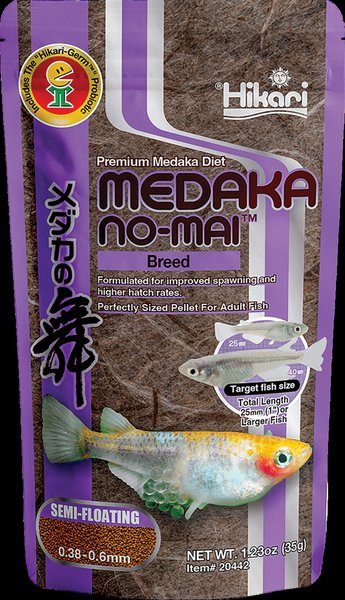
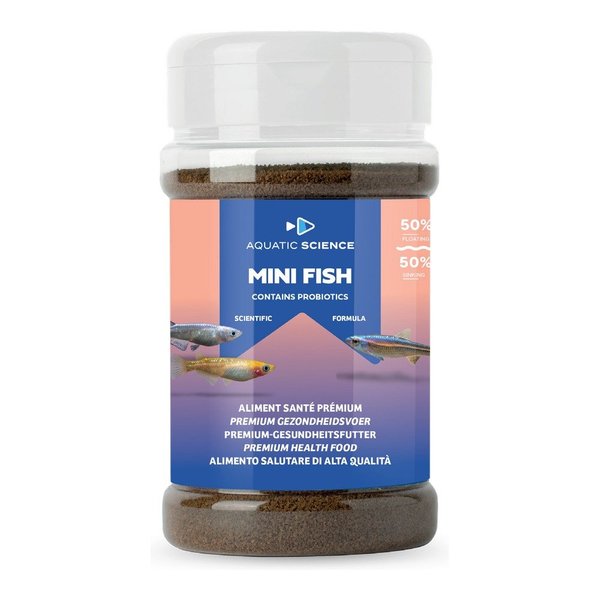
Spawning begins when two conditions are met: water at 18 to 20 °C at least, and 13 to 14 hours of daylight. In most of temperate Europe, day length passes 13 hours around mid-April. Light triggers spawning, temperature confirms it. The females then carry a cluster of eggs under the belly every morning. Set up the spawning mops and prepare the fry tub before the first spawning, not after. The details are in the breeding guide.
This is also the time for the first water change of the year, a moderate one, a quarter at most, and for clearing the dead leaves that have built up over winter. Then put the net back: dragonflies and herons return at the same time as the fish.
| Water temperature | 10 to 20 °C, cold nights |
|---|---|
| Feeding | gradual: every other day at 15 °C, one meal a day at 18 °C, full feeding at 23 °C |
| Water changes | a first change of a quarter, then a quarter to a third each week once spawning starts; outdoors, one a month plus top-ups |
| Routines | remove dead leaves, set out spawning mops, prepare the fry tub, put the net back |
Summer: heat, shade, oxygen
From June to August it is the height of the season. The medaka eat twice a day, spawn every day, and the fry from June are already young fish by August. The problem in summer is not shortage but excess: of heat, of food, of algae.
Temperature first. Above 30 °C the fish is stressed; at 34 °C it is in danger. A 20 L tub in full sun on a southern terrace passes these values in a single afternoon. According to Japanese experience, an outdoor tub can reach 35 °C in summer. The remedy comes down to three steps. Shade half the tub with a reed screen, never all of it, because the fish need sunlight. Increase the volume of water, because a large volume heats up slowly. And top up with water in the morning, dechlorinated and at the same temperature, to make up for evaporation.
Then oxygen. Warm water holds less of it and the fish use more. Gentle aeration, a simple air stone set to the minimum, is enough. Strong stirring tires medaka, which do not like a current. The warning sign is a fish gulping at the surface in the morning, especially in dense green water, which uses up oxygen at night.
Finally, feeding. Two meals a day, in the morning and late in the afternoon, never in the midday heat. Japanese breeders increase the frequency, not the amount per meal. Whatever is not eaten within two or three minutes rots quickly in water at 28 °C.
In the mild Atlantic climate of Brittany, summer is rarely a problem: the water seldom passes 25 °C. In continental and northern Europe, heat peaks are short but violent. In the Mediterranean south, shade and volume are essential from June to September.
| Water temperature | 20 to 28 °C; stress above 30 °C, danger at 34 °C |
|---|---|
| Feeding | two meals a day, morning and late afternoon, eaten within two to three minutes |
| Water changes | a quarter to a third each week in a bare tub; outdoors in a planted tub, frequent top-ups and one change a month |
| Routines | shade half the tub, gentle aeration, collect the eggs, sort the fry by size, watch the density of the green water |
Summer protection, whether blinds, netting, floating plants, or the colour and depth of the tub, with the number of degrees each one saves, is covered in floating plants and shade; reading the thermometer is covered in reading the temperature of a tub.
Autumn: preparing for winter and sorting
From September to November, the water falls from 20 to 10 °C. Spawning becomes less frequent, then stops when daylight drops below 13 hours, around the end of September. It is the season of two decisions: which fish spend the winter outside, and which come indoors.
Sorting (選別, senbetsu) is done now, when the young of the year are 2 to 3 cm long and show their colours. Keep the fish closest to the standard of the variety, and set aside those with deformed bodies and damaged fins. To read the traits of a variety, see the JMA nomenclature. Sorting in autumn avoids feeding fish all winter that you will not keep.
Feeding is cut back as the temperature falls. Between 15 and 10 °C, one meal a day, then every other day. Below 10 °C, stop completely. The fish have to build their reserves in September and October: this is the time to feed properly, not to starve them.
The tub needs preparing. Raise the level to the maximum, remove the frost-tender floating plants that rot at the first cold (frogbit, by contrast, sinks its winter buds to the bottom and restarts by itself in spring), and get the cover board ready. The fry of the year that are still small, the Daruma and the fragile fish come indoors in October, before the water drops below 10 °C. The full detail is in the overwintering guide.
| Water temperature | 20 to 10 °C |
|---|---|
| Feeding | one meal a day, then every other day between 15 and 10 °C; stop below 10 °C |
| Water changes | a last moderate change in September; after that, top-ups only |
| Routines | sort the young fish, remove frost-tender plants, raise the level, bring in fry and fragile varieties, prepare the cover |
Winter: let them sleep
From December to February, the water stays between 0 and 10 °C. The medaka are at the bottom, motionless. Do not feed, do not change the water, just top up the level. The surface may freeze, but not the whole volume. This is the season when the best thing to do is nothing, and when an anxious keeper does the most damage. The overwintering guide covers materials, frost, climates and the spring restart in detail.
| Water temperature | 0 to 10 °C; hibernation between 5 and 10 °C |
|---|---|
| Feeding | none |
| Water changes | none; top-ups with dechlorinated water at the same temperature |
| Routines | cover partially, keep a hole in the ice, do not disturb |
The dates of each routine change from one climate to another. For a worked example, month-by-month outdoor tub calendars based on Météo-France normals exist for French regions (in French): Brittany, the North and the Paris Basin, the East and Centre-East, the South-West and the Mediterranean and Corsica. They are not valid for other countries, but they show how the same thresholds play out in an Atlantic, continental or Mediterranean climate.
The figures to remember
| Tolerance | 5 to 30 °C |
|---|---|
| Spawning | from 18 to 20 °C and 13 to 14 hours of daylight; optimum 20 to 25 °C |
| Resuming feeding | gradual from 15 °C, full at 23 °C |
| Summer feeding | two meals a day |
| Heat | stress above 30 °C, danger at 34 °C; shade half the tub |
| Stopping feeding | below 10 °C |
| Water changes in season | a quarter to a third each week (bare tub); one a month plus top-ups (planted outdoor tub); Gabriel: 10 to 20% a week |
| Incubation | 250 degree-days: 10 days at 25 °C, 13 days at 20 °C |
Frequently asked questions
In which month does spawning begin?
When the water reaches 18 to 20 °C with more than 13 hours of daylight. In practice, late April to May in the Mediterranean south, May in Brittany and in northern Europe, later if the spring is cool. Indoors, with 13 to 14 hours of light and water at 23 °C, it can go on all year.
Should I change the water more often in summer?
In a bare, well-stocked tub, yes: a quarter to a third each week. In a planted outdoor tub with few fish, top-ups make up for evaporation and a monthly change is enough. See the guide to keeping medaka outdoors.
My medaka are not spawning in July. Why?
There are three common causes: water that is too hot, above 30 °C; a group with no female or with too many males; fish that are too young or too old. A female spawns mostly between her first and second summer: spawning begins at around two to three months according to Aqua Life, and Tokyo Aqua Garden notes that it slows markedly after two and a half years.
Can I keep the fry from September?
Yes, but indoors, in a tank heated to between 20 and 25 °C, with 4 to 5 meals a day. Outside, they will not be big enough to survive the winter. See the fry guide.
When should I put the predator net up and take it down?
Put it up as soon as things restart in April, raised 5 cm so that dragonflies cannot lay eggs through it, and leave it until the first frosts. Herons and cats, for their part, take no holidays. See the predator guide.
Sources
- Tokyo Aqua Garden, “メダカの季節ごとの飼い方” (keeping medaka through the seasons): https://t-aquagarden.com/column/medaka_season
- Tokyo Aqua Garden, “メダカの越冬” (overwintering medaka): https://t-aquagarden.com/column/medaka_hibernation
- Tokyo Aqua Garden, “メダカの屋外飼育” (keeping medaka outdoors): https://t-aquagarden.com/column/medaka_outdoor_breeding
- Tokyo Aqua Garden, “足し水” (topping up): https://t-aquagarden.com/column/medaka_water_injection
- medaka.fr fact base (Kamihata, WEB図鑑): temperature thresholds, day length, water change frequency, incubation.
- Medaka care guide, afloredeau.com (À Flore d’Eau, Gabriel Gayrin): 10 to 20% a week, stop feeding below 10 °C.